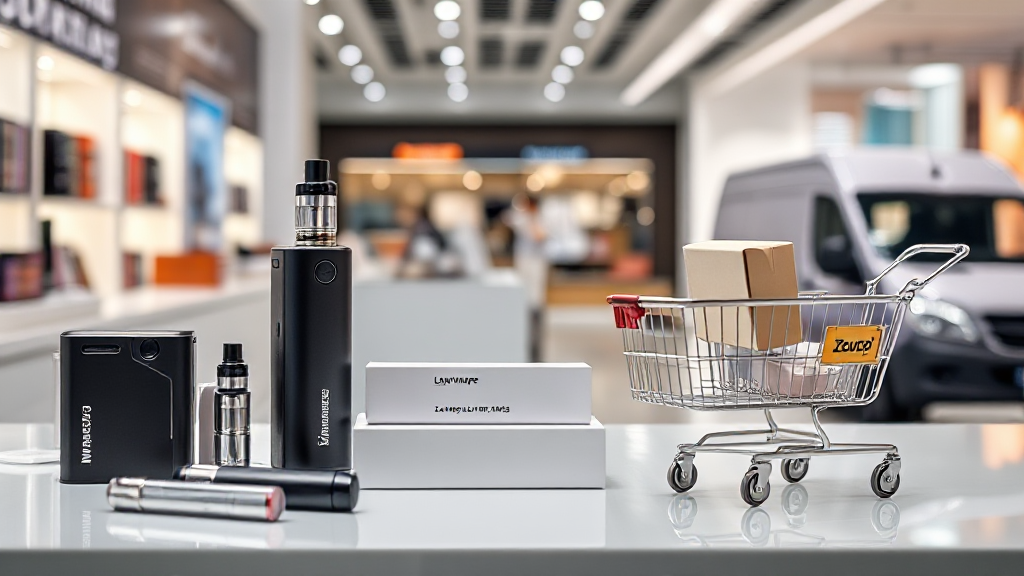
Reading a Lana Ultra 2 Listing With a Skeptic’s Eye
I have bought enough things online to know that a product page is not a neutral document. It is a sales pitch wearing the costume of a spec sheet. So when I opened a Singapore vape store listing for the Lana Ultra 2, I did not start at the price. I started at the claims, because claims are where an online store either earns trust or quietly spends it. The page was confident. Every listing is confident. The real question is which parts of that confidence survive a closer look, and which parts are just decoration.
This is not a review of a device I have held in my hand. It is an audit of a listing, written from the perspective of someone who has been burned before by vague puff counts, mystery compatibility, and delivery promises that evaporated at checkout. If you are searching for a snowwolf 16k or weighing a Lana Ultra 2 against it, the same skepticism applies. Here is how I read the page, claim by claim.
The Puff Count Claim: Useful Number or Marketing Fog?
The first thing any listing wants you to see is the puff count, and the Lana Ultra 2 leads with a big one. My instinct is always to ask what that number actually measures. Puff counts are not standardized. They are usually calculated under lab conditions with short, shallow draws, which almost nobody replicates in real life. A heavy user will drain any device faster than the box suggests, and a light user might stretch it further.
That does not make the number a lie. It makes it a ceiling rather than a promise. A reasonable reading is that the figure represents the best-case scenario, not the average one. If you plan around the advertised count as though it were guaranteed, you will feel cheated. If you treat it as an upper bound and expect something less, the device will probably land where you expect. The listing is not wrong to print the number. It is wrong only if you read it as a contract.
What I do look for is consistency. If the same store lists a marbo vape 25k and a lana pen plus 9k with the same confident formatting and the same method of describing capacity, that tells me the store is applying one standard across its catalog rather than cherry-picking. Uniformity is a small signal, but it is a real one.
The Flavor and Variant Claim: Does the Page Tell You What You Are Actually Buying?
Variant confusion is the most common way an online vape purchase goes wrong. You order what you think is one flavor, and something adjacent arrives. So I read the variant selector carefully. Does the listing name each flavor distinctly, or does it use vague categories that could mean anything? Does it tell you the nicotine strength, or leave you to guess? Does it show a clear image for the specific variant, or one generic photo reused across the whole range?
A trustworthy listing does not make you reverse-engineer your own order. If the Lana Ultra 2 page shows separate, clearly labeled options and the images match the names, that is a point in its favor. If the options are ambiguous, I would rather ask before paying than gamble on a guess. This is the single most fixable problem in online vape retail, and the stores that fix it are the ones worth returning to.
The same logic applies when I compare it to a lana pix 20k. Two listings from the same store should be equally clear. If one is precise and the other is a wall of vague text, that inconsistency is worth noticing, because it suggests the clarity is accidental rather than a policy.
The Authenticity Claim: Can You Verify It, or Just Believe It?
Every online vape store claims to sell authentic products. The claim is cheap to make and expensive to prove. So the useful question is not whether the listing says “authentic.” It is whether the listing gives you any way to confirm it. Batch codes, verification instructions, clear packaging photos, and a stated sourcing policy all move the claim from marketing to something checkable.
When a store carries recognizable product lines like marbo 25k alongside Lana devices, brand familiarity helps a little. Counterfeiters tend to target the most popular products, so a store that stocks a broad, coherent catalog is not automatically safe, but it is at least operating in a space where buyers know what the real thing looks like. That shared knowledge is a mild deterrent.
What I cannot confirm from a listing alone is the supply chain. No page will show me the warehouse, the invoices, or the batch records. So I treat authenticity as a claim with partial evidence, not a settled fact. The listing earns some credit for how it presents the product, and it loses credit for anything that looks copied, generic, or recycled from a manufacturer’s marketing kit.
The Delivery and Payment Claim: The Part That Actually Determines Your Experience
A device is only as good as the transaction that delivers it. This is where Singapore buyers have specific expectations, and where listings often get vague. Fast delivery is easy to print and harder to deliver. Cash on delivery is a meaningful convenience for anyone who does not want to pay upfront to an unfamiliar store. Discreet packaging matters to plenty of customers who would rather not announce their purchase to the whole block.
I read these claims the way I read a restaurant’s promise of “fresh ingredients.” It is probably true, but the proof is in the experience, not the sentence. What I can assess from the page is whether the store states its delivery terms clearly, whether the payment options are actually listed rather than implied, and whether the packaging policy is described in plain language. A store that explains these details is a store that has thought about the buyer. A store that buries them is hoping you will not ask.
For comparison, a lana pix listing from the same store should carry the same delivery and payment terms. If the terms differ between products for no clear reason, that is a small red flag. Consistency in logistics is a sign of an actual operation rather than a drop-shipper improvising as they go.
The Compatibility and Usage Claim: What the Listing Leaves Out Matters
Disposable and pod-based devices live or die on compatibility, and listings are often silent about it. Does the page tell you whether the device is draw-activated or button-fired? Does it mention charging, and if so, what kind? Does it say anything about how to store it, or how long it lasts once opened? These are not glamorous details, but they are the ones that determine whether the product works for you.
I also notice what the listing does not claim. If it avoids promising things it cannot control, that is a good sign. If it makes sweeping statements about performance, longevity, or flavor intensity without any qualifier, I discount those statements heavily. Overpromising is the tell of a page written to convert rather than to inform.
This is also where adjacent product knowledge helps. A buyer who understands the difference between a compact pen-style device and a larger disposable can read a lana ultra 2 listing with better judgment than someone who is only comparing numbers. The more context you have, the less you depend on the listing’s own framing.
The Store-Level Claim: Does the Brand Behind the Listing Hold Up?
A product page is only one artifact. The store around it tells you more. Does the site have a coherent catalog, or is it a random assortment of whatever was in stock that week? Does it carry recognizable names across categories, from Lana devices to heated tobacco products like terea singapore? A store that spans multiple product families is usually a store with real supplier relationships rather than a temporary storefront.
I also look at how the store talks about itself. Claims about being the best, the cheapest, or the fastest are noise. Claims about specific practices, such as how orders are packed or how delivery is handled, are signal. Specificity is hard to fake and easy to verify. Vagueness is the opposite.
None of this tells me whether the Lana Ultra 2 specifically will satisfy me. It tells me whether the seller is likely to be around next month, whether a problem would be handled, and whether the listing I am reading was written by someone who knows the product. Those are the questions that matter after the price stops being interesting.
The Verdict: What Holds Up and What Deserves a Second Look
After reading the listing claim by claim, my honest assessment is that some of it holds up and some of it is the usual marketing gloss. The puff count is a best-case figure, not a guarantee, and should be read as such. The flavor and variant information is only as good as the clarity of the options presented, and that is worth checking before you pay. Authenticity is asserted rather than proven, which is normal but not reassuring on its own. Delivery, payment, and packaging claims are meaningful only if the store states them plainly, and those are the terms I would verify before committing.
What I would not do is dismiss the listing outright. A confident page is not automatically a dishonest one. The useful move is to separate the claims you can check from the claims you can only trust. Check the variant clarity, the delivery terms, the payment options, and the consistency of the catalog. Trust the rest only as far as the store’s track record justifies.
For a first-time buyer, that means reading less like a customer and more like an auditor. The Lana Ultra 2 listing, like any listing, is a set of assertions. Your job is not to believe all of them. Your job is to figure out which ones survive contact with a skeptical eye, and to spend your money only on the ones that do.